The following includes a project, with its associated course, completed for the Content Strategy Graduate Certificate program at Humber College, as well as two published articles.
Project
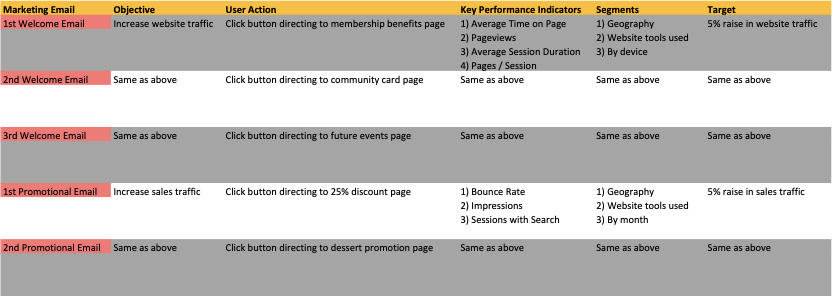
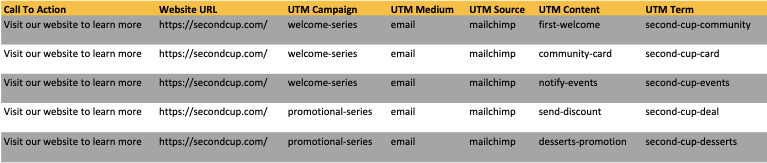
Analytics for Content Strategy: UTM Measurement Plan and UTM Parameter Plan (UTM stands for “Urchin Traffic Monitor”, and UTM codes are bits of simple code that can be added to the end of a URL – this helps track campaign and content performance)
Outcome: In theory, these documents would help Second Cup know what to measure when these email campaigns are in action (from a success standpoint), as well as keep an organized log of the campaigns and their associated UTM components


Articles
The Marvelous List of Minerals
Much like vitamins, minerals are essential to health. They can be split up into two boxes: macrominerals, which are required in relatively large amounts, and microminerals, which are needed in relatively small quantities. Calcium, sodium, chloride, potassium, phosphorus, magnesium, and sulphur are classified as macrominerals. Microminerals include iron, zinc, copper, selenium, iodine, fluoride, chromium, and manganese. As a whole, the substances that fit in these categories are inorganic and make up about 4% of one’s total body weight. They are solid, with a crystal-like structure, and are not broken down during the digestion process. An interesting note is that minerals cannot be destroyed by heat, cold, light, chemical exposure, or mechanical force. They also carry an electrical charge, which allow nerve impulses to be transmitted and muscle contraction to occur. Lastly, minerals maintain the firm nature of bones and teeth. All information presented was retrieved from Dr. Rolando Ceddia.
Macrominerals have a necessary daily intake of at least 100 mg. Alternatively, microminerals have a necessary daily intake of less than 100 mg.
The minerals that play a role in the conversion of food into energy are chromium, manganese, sulphur, selenium, and iodine.
Those that assist in keeping hydration and muscle function in their healthy states are phosphorus, potassium, sodium, and chloride.
The minerals that support the proper function and characteristics of blood are iron, zinc, and copper.
Those that are involved in maintaining bone structure and function are calcium, phosphorus, magnesium, and fluoride.
Calcium
Most calcium in the human body is found in the bones and teeth, while a small amount is distributed within fluids that are either inside or outside of cells. The main functions of this substance are the following: acting as a structural component of bones and teeth, keeping the body’s acid-base balance at an appropriate level, serving a critical purpose in muscle contraction, helping nerve impulse transmission, and supporting blood clotting.
Overall, in comparison to the total quantity ingested, about 25-30% of calcium is absorbed. In terms of specific supplements, the absorption rate is slightly greater. For both of these scenarios, the amount of calcium ingested is a contributing factor. One substance that limits the availability of calcium for the body to access is fibre. On the other hand, some aspects that enhance its absorption are the presence of Vitamin D, sugars, sugar alcohols, and protein.
The recommended intake of calcium is 1,200 mg/day for both women and men who are 50 years of age or older. It is best retrieved from certain items, such as milk, milk products, sardines with edible bones, clams, oysters, broccoli, bok choy, legumes, dried fruits, and calcium fortified juices.
Iodine
Within the body, the thyroid gland contains the highest concentration of iodine. This gland regulates energy metabolism and protein synthesis. It also plays an important role in fetal brain and skeletal development.
A primary function of iodine is its crucial participation in the synthesis of thyroid hormones. These substances assist greatly regarding temperature regulation, reproduction, carbohydrate and fat metabolism, protein synthesis, and growth. Iodine is found in a number of dietary sources, including iodized salt, salt water, skim milk, yogurt, cheddar cheese, liver, eggs, and seafood.
Iron
The majority of iron in the body (around two-thirds) is located within red blood cells, and more specifically, is a part of hemoglobin. Hemoglobin is the pigment held by these cells, which binds and transports oxygen to the tissues. This substance is often referred to as heme iron or nonheme iron. The former is a component of many animal products, while the latter can be obtained from plants and plant-derived foods. Heme iron is more efficiently absorbed than nonheme iron.
Vitamin C, gastric acidity, lactic acids, meat, fish, and poultry all enhance the absorption of this mineral. Calcium (in the form of supplements or contained within food and beverages) reduces iron absorption. The key storage protein associated with this substance is active in numerous tissues, especially within the liver, bone marrow, intestines, and spleen. These are locations where iron absorption, storage, or red blood cell catabolism (in other words, destructive metabolism) takes place.
Iron plays a significant role in the transport and use of oxygen, energy production, amino acid metabolism, and the synthesis of collagen and thyroid hormones. The recommended intake of iron is 8 mg/day for both women and men who are 50 years of age or older. It is contained in a variety of sources, such as liver, meat, molasses, clams, oysters, green leafy vegetables, nuts, legumes, dried fruits, and enriched whole grains.
All in all, similar to the case of vitamins, keeping in mind one’s intake of the major minerals from this range is an important process. As a result, issues that stem from deficiencies can be better avoided, and health improvements will lead to increased performance and enjoyment of daily activities.
What is Mise-en-scène in the world of Film?
With the recent kick-off of the Toronto International Film Festival, residents of the city and visitors from around the world have come together to celebrate movies and their impact. Keeping COVID-19 as a primary concern, many virtual and safely executed in-person events characterize this year’s festival. As a range of films is debuted to the public, viewers might wonder about the different styles and themes being showcased. One such concept that ties in with this discussion is mise-en-scène, a term that was new for me when I was first introduced to it during university, in an Introduction to Film course.
According to instructor Zaira Zarza, mise-en-scène can be defined as the “elements that appear in the [movie] frame that the director has control over, whether they are intended or not”. This idea can be broken down into four aspects: setting, lighting, costume and make-up, as well as staging (which encompasses movement and performance). An individual look at each of these will follow, and their importance within films as a whole will be explored.
Setting
Enclosed in the frame, specific characteristics serve to depict the space, place, and time period of a film. These come together to form the overall setting. The design of this aspect can influence the spectator’s understanding of the various action points that a story presents. A filmmaker can make selections regarding colour, existing or constructed locations, use of props, and scale. The result has the potential to leave a memorable impression on the viewer and situates the film in question within a certain present or historical context.
Lighting
Lighting may be used to guide the attention of the audience. Through highlights and shadows, it functions to create shape and texture. A patch of relative brightness on a surface can be referred to as a highlight, while portions of darkness on objects is obtained by shadows. The components that fall under the umbrella of lighting include quality, direction, source, and colour. Quality deals with the intensity of the light, as well as how it can be defined as either hard or soft. The path of light from its source(s) to the items receiving the light can describe direction. Noteworthy types of direction are included in the following list:
- Frontal light – Removes shadows
- Sidelight – Sculpts the features of characters
- Backlight – Originates from behind the subject, forms silhouettes
- Underlight – Accomplishes the distortion of features, often used to create dramatic horror effects
- Top Light – Starts directly from above
In terms of source, and within Hollywood cinema, one of the basic techniques is known as three-point lighting. Lastly, colour and light play significant roles in all films, sometimes most notably in ones that are animated.
Costume and Make-up
This aspect of mise-en-scène can also serve specific purposes within a film. They each can be realistic or stylized, depending on the movie’s subject matter. Choices surrounding costume and make-up have a strong relationship with the structure of the setting, as both bring crucial visual components to the particular story. When one thinks of their favourite films, and the characters within those worlds, this topic might stand out to them as part of the reason they are drawn to and feel a connection with the movie.
Staging
Acting performances and the movement of figures are involved when staging is the focus of discussion. They will have an individual and stylistic nature according to the messages the film is setting out to convey. Staging is best evaluated through a lens of function and motivation, both within the entirety of the movie and in relation to other techniques. In addition, space and time factors connect with this aspect, and either can be constructed in deliberate ways by filmmakers. Screen space deals with how a specific shot is composed, while scene space covers the depth and volume of the depicted area. When time is referred to in this manner, it means the speed and direction of movement displayed by a shot are being investigated. The spectator’s attention is drawn to a departure from stillness, thus, it guides where the focus is turned. Furthermore, frontality can also achieve the same effect, whether this state is being transitioned to, featured, or a switch is taking place to an alternate one.
All in all, mise-en-scène can be divided into four boxes: setting, lighting, costume and make-up, and staging. An exciting piece of this topic is that it can be applied outside of the film realm, such as within the design and performance of theatre productions. I encourage compelled readers to dive deeper into their learning of mise-en-scène, and to keep it at the back of their minds when enjoying future films. While broad, it is a fascinating classification that all movie-lovers can expand their knowledge and passion with upon discovery.
 Data-Driven Thinker